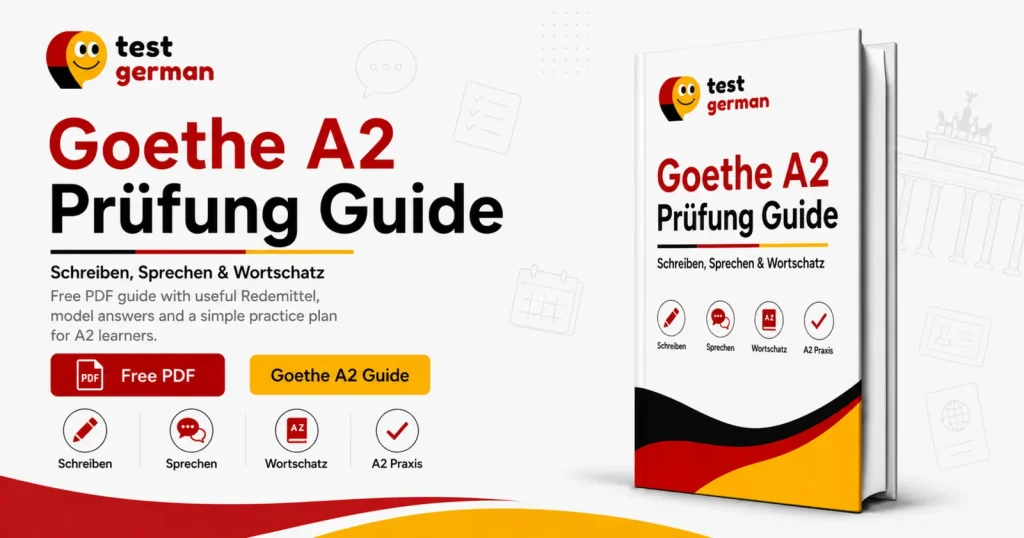
The Goethe A2 Prüfung Guide helps learners prepare for the Goethe A2 exam with simple strategies and practical German examples.
The guide explains Schreiben, Sprechen, and useful Wortschatz in detail. It also gives an exam overview, model answers, a checklist, and a seven-day practice plan.
It is designed for learners who need clear structure rather than complicated theory.
What is the Goethe A2 Prüfung?
The Goethe-Zertifikat A2 is a German language exam for learners at the A2 level. It checks whether you can understand and use simple German in common everyday situations.
The A2 exam is one level of the Goethe-Zertifikat. You can find more information about all levels from A1 to C2 in our German article Goethe-Zertifikat: Dein ultimativer Guide für die Prüfung (A1–C2).
The exam tests four language skills:
- Lesen
- Hören
- Schreiben
- Sprechen
At the A2 level, you should be able to understand short messages, simple conversations, and basic written information. You should also be able to write short texts and communicate about familiar topics such as work, family, free time, appointments, shopping, and daily plans.
Reading / Lesen
In Lesen, you need to understand short written texts and find important information.
You may need to recognize details such as
- names
- times
- places
- prices
- plans
- reasons
A useful strategy is to read the task first and then look for the information you need. You do not have to understand every word.
Listening / Hören
In Hören, you listen to everyday German and answer questions about what you hear.
The important skill is recognizing the main message and useful details. Pay special attention to numbers, times, dates, places, and what people want to do.
Do not panic when you hear an unknown word. At the A2 level, you can often understand the answer from the context.
Writing / Schreiben
The Goethe A2 writing section in the guide includes two writing tasks.

In Teil 1, you write a short message or SMS. You normally need to react to a situation and answer the required points in a very short text.
In Teil 2, you write a short email. Here, you should use a suitable greeting, answer all task points, and finish with an appropriate closing.
For example, you may need to:
- apologise
- explain why you are late
- suggest a new time or place
- thank someone for an invitation
- say whether you can come
- ask a simple question
At the A2 level, clear and complete sentences are more useful than complicated grammar. You can find more letter and email templates in our article Deutsch Brief Schreiben A1-B1 Guide: 25 Musterbriefe, E-Mail Templates & Redemittel.
Speaking / Sprechen
The speaking section has three parts. You ask and answer simple personal questions, talk briefly about your own life, and plan something together with your partner. In the planning task, you suggest a time or place, react to your partner’s ideas, and agree on a final plan.

The guide includes a practice task for each part. For detailed speaking strategies and useful phrases, see our German article Goethe-Zertifikat A2 Sprechen – So bestehst du den mündlichen Teil (2026).
The goal of the Goethe A2 Prüfung is not perfect German. The important thing is that your answer is understandable, fits the task, and includes the information the examiner asks for.
Exam formats and rules can change. Therefore, always check the official Goethe-Institut information before your exam.
What is inside this Goethe A2 Prüfung Guide?
The PDF includes:
- Goethe A2 exam overview
- Scoring overview and pass requirements
- Four-skill explanation, including the parts of Lesen and Hören
- Schreiben Teil 1 structure
- Schreiben Teil 2 structure
- SMS model answer
- Email model answer
- Speaking Teil 1 practice
- Speaking Teil 2 personal talk
- Speaking Teil 3 planning
- Useful planning phrases
- Topic-based A2 vocabulary
- Vocabulary example sentences
- Checklist
- 7-day practice plan

Why this guide helps you prepare better
At the A2 level, you often know enough German to communicate, but you may still need structure.
In Schreiben, learners may forget one point or use the wrong register. In Sprechen, they may give one-word answers or stop after one sentence. This guide shows you how to turn a simple answer into a complete one.
Prepare with Test German
Once you understand the task, practice it under exam-style conditions.
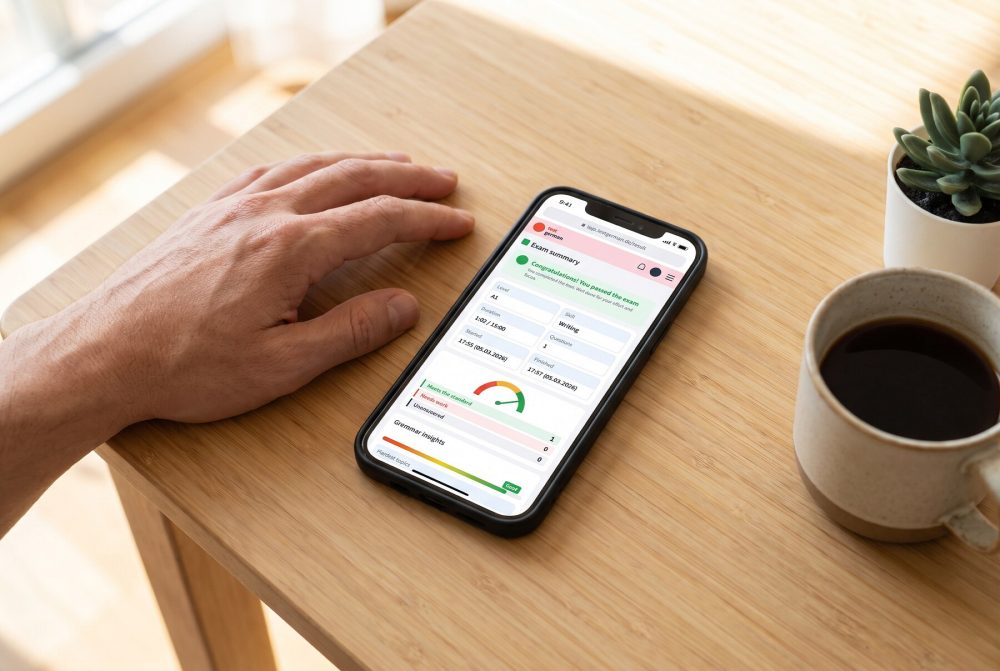
Test German gives you level-based practice for reading, listening, writing, and speaking.
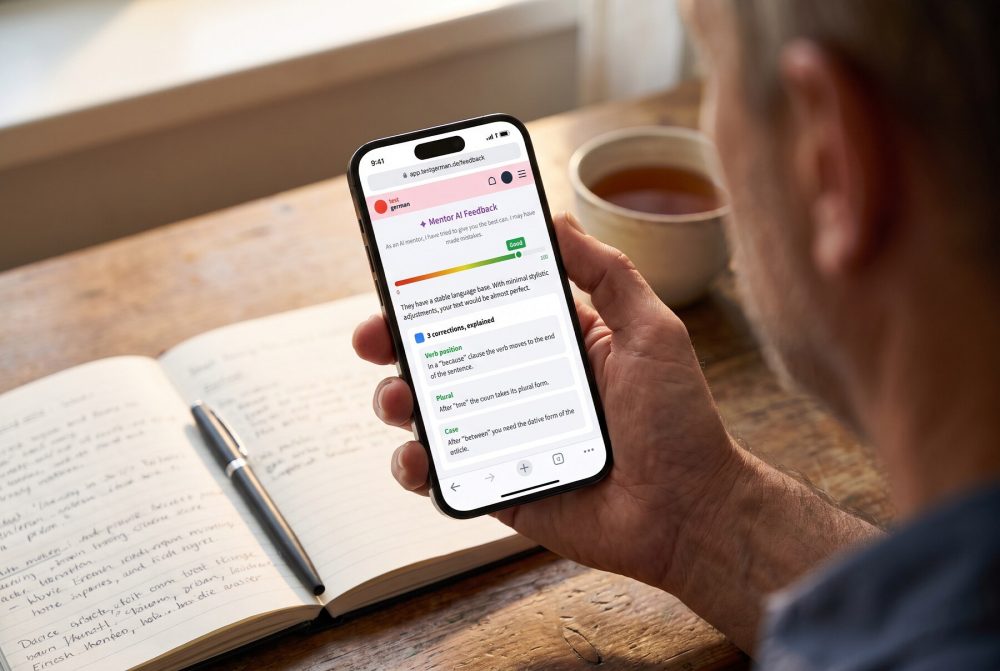
AI feedback for writing and speaking can help you understand problems with:
- grammar
- word order
- task completion
- vocabulary
- fluency
- pronunciation
Who is this guide for?
- Goethe A2 candidates
- Learners moving from A1 to A2
- Learners who need Goethe A2 Schreiben practice
- Learners preparing short speaking tasks
- People who need practical A2 vocabulary
- Teachers supporting Goethe A2 students
Not sure which German exam provider fits your plans? You can find more information in our article Professional guide to German language exams: Goethe, Telc, and TestDaF.
Download the free Goethe A2 Prüfung Guide
Use the PDF as a short workbook.
Study one section, practice the example, and then create a new answer.
Download the free Goethe A2 Prüfung Guide (PDF)
Sources
The exam information in this article and in the PDF guide is based on the following practice materials:
- Goethe A2 model set
- Goethe A2 speaking practice
- Goethe A2 writing practice
This guide is for learning and practice. Test German is not an official exam provider.