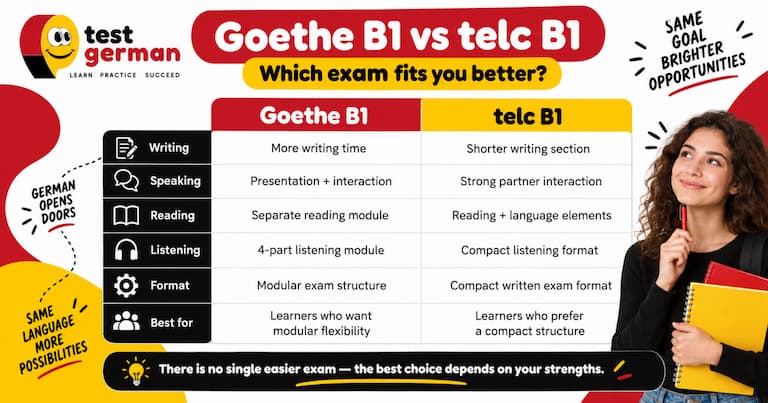
Goethe-Zertifikat B1 and Telc Deutsch B1 test the same CEFR level, so neither exam is a shortcut. They differ in structure and timing. Goethe has four modules that can be booked separately: reading (65 minutes), listening (about 40 minutes), writing (60 minutes), and speaking (about 15 minutes) in pairs. The written part of Telc Deutsch B1 is usually one sitting of about 2.5 hours: reading with language elements (90 minutes), listening (about 30 minutes), and writing (30 minutes). Speaking is a pair exam of about 15 minutes. The better format is the one that matches how you write, listen, and speak under time pressure, and the one your authority accepts.
Goethe B1 vs Telc B1
| Area | Goethe B1 | Telc Deutsch B1 |
|---|---|---|
| CEFR level | B1 | B1 |
| Reading | 65 minutes | 90 minutes, shared with language elements (Sprachbausteine) |
| Listening | About 40 minutes, four parts | About 30 minutes, three parts |
| Writing | 60 minutes, several text types | 30 minutes, one task |
| Written part in total | About 165 minutes | About 150 minutes |
| Speaking | About 15 minutes as a pair, plus 15 minutes of preparation | About 15 minutes as a pair, three parts |
| Structure | Four modules, bookable individually or together | Usually one combined exam; partial examination is possible, so confirm with your centre |
Exam providers update administrative details from time to time, so check the current structure when you register. For a wider comparison that includes the DTZ, read our guide to Goethe vs Telc vs DTZ.
Writing: 60 minutes for several texts or 30 minutes for one
Writing is the clearest difference between the two formats. Goethe B1 gives you 60 minutes. You write personal and formal emails or letters and a forum-style opinion post. Telc B1 gives you 30 minutes for one writing task.
The shorter time doesn’t automatically make Telc easier. If you plan carefully and enjoy developing an argument, Goethe’s longer module may suit you. If you can organize an email quickly and prefer one compact task, Telc may feel more manageable. What matters is whether you can produce the required text type reliably within the time you have. Our Goethe B1 Schreiben guide shows what the Goethe tasks ask for.
Reading: comprehension only or comprehension plus language elements
The Goethe reading module uses texts such as blog posts, emails, newspaper articles, advertisements, and written instructions. You identify key information, details and opinions.
The Telc written exam combines reading tasks with Sprachbausteine, which are language-element tasks on grammar and vocabulary. They share one 90-minute block, so grammar and vocabulary knowledge appears explicitly in the exam structure. If you enjoy gap-fill grammar in context, that can work in your favor. If you prefer a module that tests comprehension alone, Goethe may feel more comfortable. This is a question of format preference, not difficulty.
Listening: four parts in 40 minutes or three parts in 30
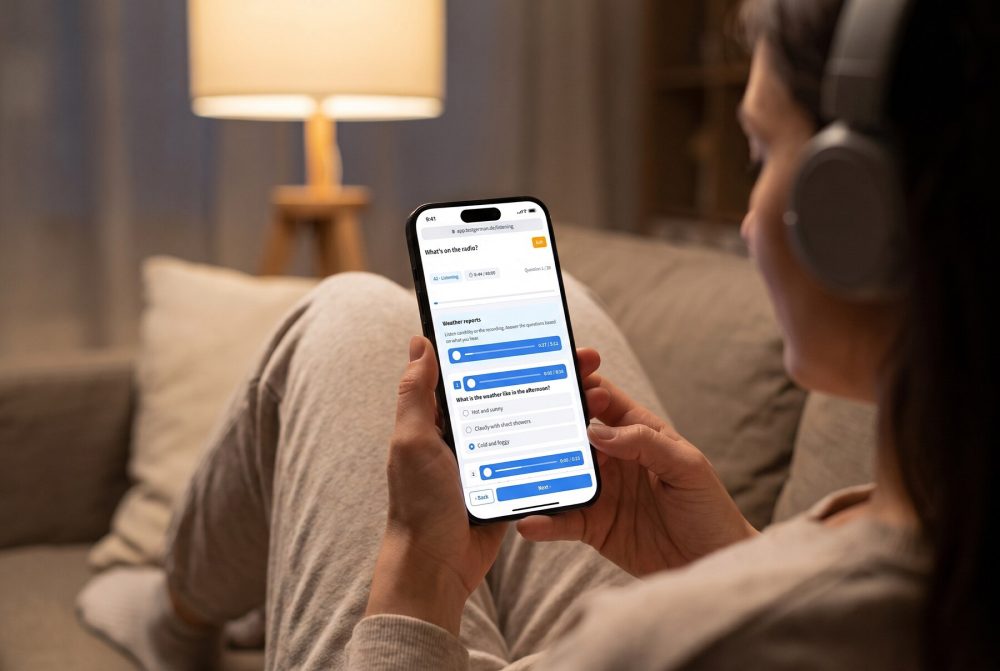
Goethe B1 Hören lasts about 40 minutes and has four parts: short texts, an announcement, a conversation, and a discussion. Our Goethe B1 Hören tips explain each part. Telc B1 listening takes about 30 minutes and has three parts.
A shorter section is easier on concentration for some learners. Others do better with a format they have practiced many times. Test both before you decide.
Speaking: similar length, different task flow
In both exams, you usually speak with another candidate for about 15 minutes. The Goethe B1 speaking module asks you to plan something together with your partner, give opinions and suggestions, and present a short talk on a current topic. You receive 15 minutes of preparation time. The Telc oral exam has three parts and also puts weight on direct interaction.
If partner interaction makes you nervous, practice it before you take either exam. Our guides to Goethe B1 Sprechen and Telc B1 Sprechen cover both task flows.
Modules and retakes
Goethe confirms that the four B1 modules can be taken individually or in combination, and that passed modules receive their own results. This helps if one skill is much weaker than the others, or if you have limited preparation time before a deadline.
Telc describes its B1 exam as available as a partial examination, but the conditions differ by center. Confirm them with the center where you plan to register. Our Telc B1 Prüfung guide explains the structure in detail.
Citizenship, work and recognition
Which certificate you need depends on who asks for it. For German citizenship, the competent naturalization authority decides, and recognized B1 certificates are listed there. Our guide to the B1 certificate for naturalization covers the requirements and the Goethe, Telc and DTZ options.
For work or professional recognition, ask your employer or the recognition authority for the exact certificate name before you pay for an exam. Some professions require a job-specific certificate instead of a general B1.
Cost and dates
Prices vary by country, center, and format, so one universal comparison would mislead you. Compare the total registration cost, the waiting time, and the next available date at the centers near you. Availability often matters more than a small price difference.
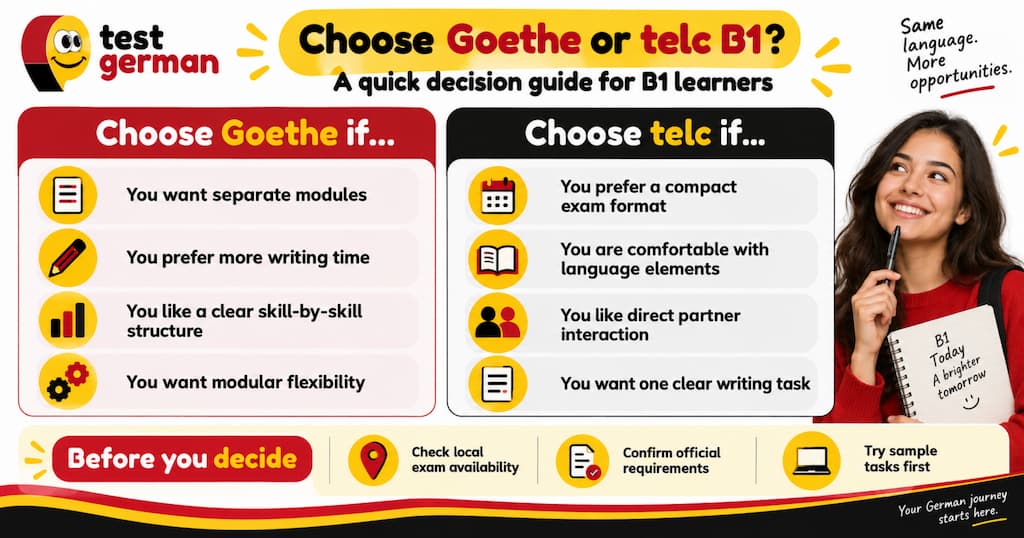
Which format suits which learner?
| Your situation | Likely better starting point |
|---|---|
| You want separately bookable modules | Goethe B1 |
| You need a longer writing slot with several text types | Goethe B1 |
| You prefer one shorter writing task | Telc Deutsch B1 |
| You are comfortable with Sprachbausteine | Telc Deutsch B1 |
| One provider has much earlier local dates | That provider |
| Your authority names one certificate | Follow that requirement |
| You cannot tell yet | Do one official sample of each first |
Use this table to guide your research, not to replace the registration requirements of your authority or center.
Test both formats before you choose
Complete an official sample of both exams before you pay. Record your reading and listening results, time your writing honestly, and record yourself on the speaking tasks. Then compare your scores and also how manageable each format felt. Practice results tell you more than reputation or online opinions.
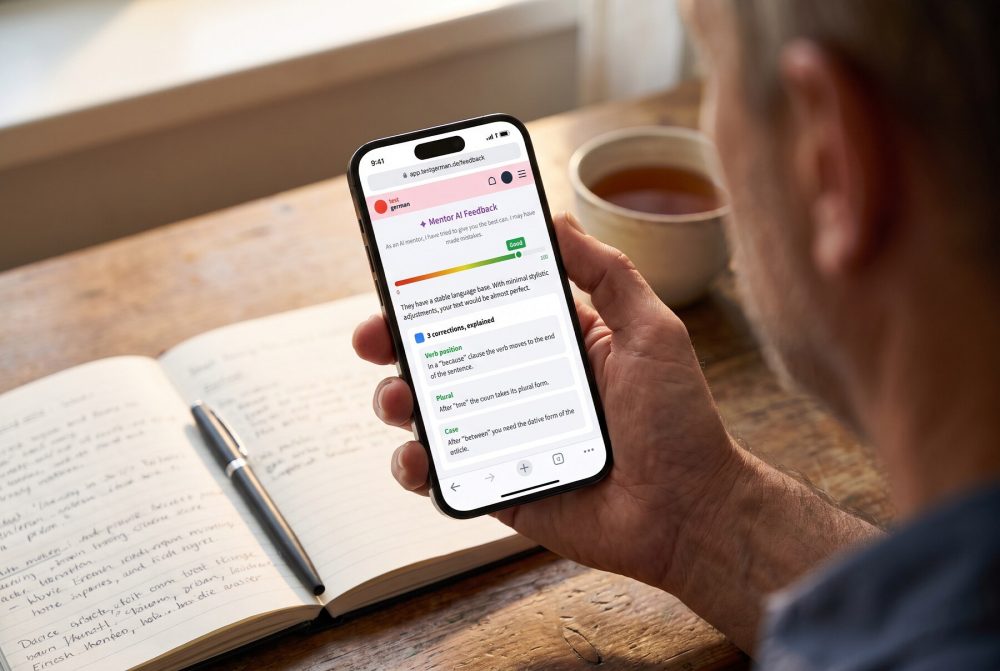
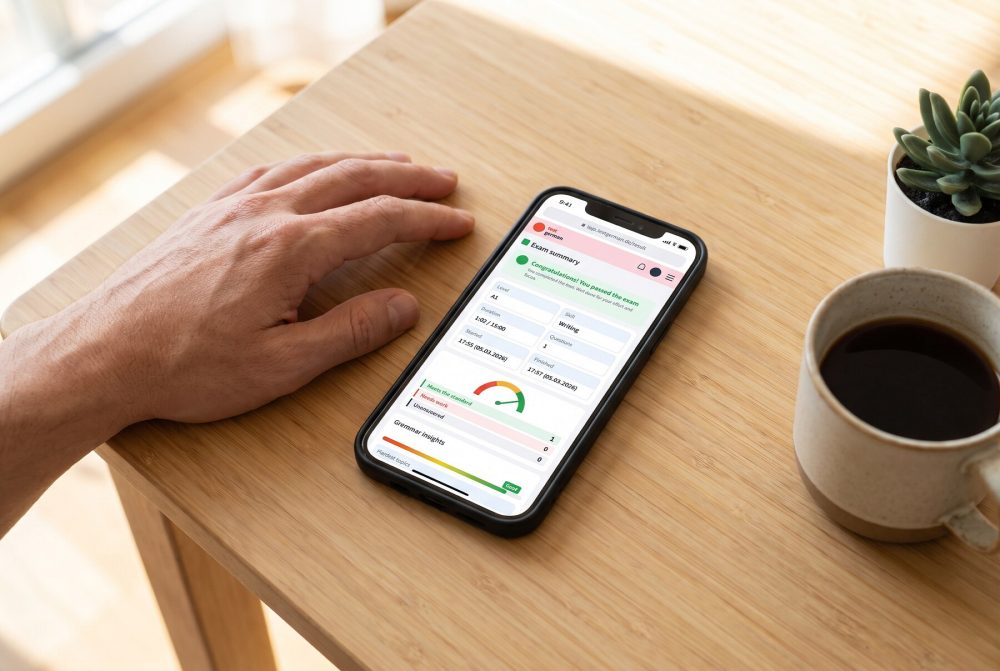
Test German supports preparation for both Goethe and Telc, so you can practice exam-specific tasks instead of studying for a generic B1 exam.
Start for free and compare Goethe and Telc B1 practice. No credit card. No time limit. Upgrade only if you want more.