German language requirements for work: skilled worker visas, Chancenkarte, professional recognition, vocational language courses and job-related exams.
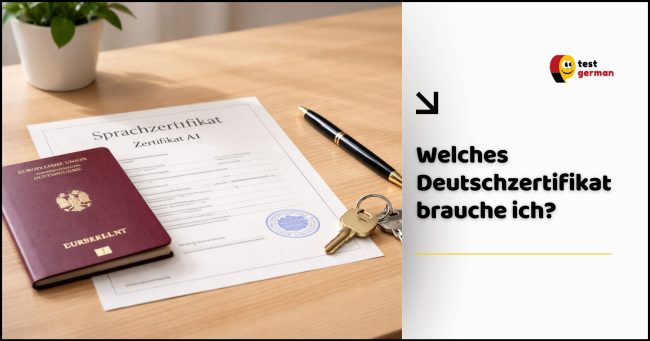
You have the certificate. Telc Deutsch B1, or the DTZ, maybe Goethe-Zertifikat B1. The invitation to the Vorstellungsgespräch is in your inbox.
Then someone across the table says “Erzählen Sie doch mal kurz etwas über sich” and your German disappears.
Choosing the right German exam for professional recognition in Germany is a key step for many skilled professionals. If you hold a diploma from another country, you may need official recognition before you can work in your field. This process checks whether your qualification matches German standards.
German language requirements for a work visa can be confusing in 2026. Germany continues to welcome skilled workers in many sectors, but the required language level depends on your profession, your employer, and your visa pathway. Some visa routes do not require proof of German skills, yet real working life is a different story: you need German for interviews, emails, documents, and daily communication.
The Chancenkarte is an important topic for many people in 2026. Many learners want to know one simple thing. Can I look for a job in Germany with A1 German?
The answer can be yes. However, you must understand the rules clearly. The Opportunity Card, or Chancenkarte, helps skilled workers enter Germany for job search. For the points route, applicants need German at A1 or English at B2. They also need formal training or a university degree. In addition, they need enough money for their stay.
After everyday German, many learners reach a point where they need German for work. They want to write clearer emails, speak more confidently with colleagues, and understand contracts, interviews, and job tasks. This is exactly where Berufssprachkurse come in: they help people move from general German to workplace German.
Many young people want to start vocational training in Germany, but they are unsure about one key question: how much German do they actually need?
The short answer is B1. Vocational school lessons are taught in German, and the Federal Employment Agency expects trainees to follow them without major language problems. For the training visa, German skills at level B1 (CEFR) are the standard requirement.
Die Reformen des Fachkräfteeinwanderungsgesetzes in den vergangenen Jahren haben die Rahmenbedingungen für Zuwanderung spürbar verändert. Gleichzeitig bleibt der Nachweis von Sprachkenntnissen für viele Bewerber ein zentraler Bestandteil des Prozesses.
Der Weg zur ärztlichen Tätigkeit in Deutschland führt für ausländische Ärztinnen und Ärzte in den meisten Fällen über eine zentrale Hürde: die Fachsprachenprüfung (FSP) Medizin. Sie gilt als einer der anspruchsvollsten Schritte im gesamten Anerkennungsprozess.