Which German Level Do You Need for a Work Visa in Germany in 2026?
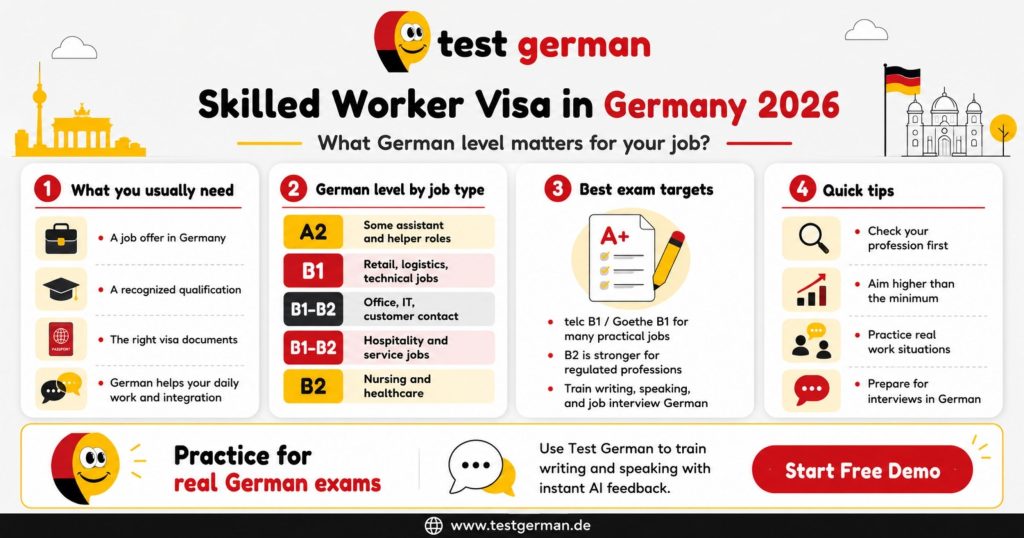
German language requirements for a work visa can be confusing in 2026. Germany continues to welcome skilled workers in many sectors, but the required language level depends on your profession, your employer, and your visa pathway. Some visa routes do not require proof of German skills, yet real working life is a different story: you need German for interviews, emails, documents, and daily communication. Employers often prefer applicants with B1 or B2 German, especially in customer-facing or regulated professions.
For this reason, don’t think only about the visa form — think about your first year in Germany. This guide explains which German level you should target and how Goethe and telc practice can support your plan. As visa regulations may change, always check the latest requirements with the relevant German authorities or your future employer.
What the skilled worker visa checks
A skilled worker visa usually focuses on your professional qualifications and a valid job offer. Depending on your profession and visa pathway, your foreign qualification may also need to be recognized in Germany. Language requirements can vary, and some visa categories do not require a German certificate during the application process. However, many professions — especially regulated occupations — have separate language requirements for employment or professional recognition.
Official information about skilled worker immigration is available on the Make it in Germany website, and details on residence permits can be found through the Federal Foreign Office. Profession-specific recognition requirements are listed on Anerkennung in Deutschland.
Before you plan your preparation, ask two questions: What does the visa office need? And what does my profession need? These two answers together give you a much safer target than any single, general level.
Why German still decides your success
Even when a visa pathway does not ask for German, your workplace almost certainly does. You may need to call a colleague, understand a safety rule, or write a short email. A1 or A2 rarely gives enough comfort in these situations. B1 lets you handle routine tasks; B2 lets you explain problems and take part in meetings.
As a result, B1 is a realistic first career target, and B2 is often the better long-term goal — especially for office, healthcare, logistics, hospitality, and technical roles. Strong German is one of the most reliable advantages you can bring to employment in Germany.
B1 or B2: Which level should you choose?
Choose B1 if you need daily work communication. At B1, you can introduce yourself, answer routine questions, and write simple messages. B1 also helps with appointments, housing, and official letters.
Choose B2 if your job needs precise language. Nurses need clear patient communication, office workers write emails and join meetings, and teachers give professional explanations. B2 provides more safety in these situations, and many employers see it as a stronger signal.
You don’t need to wait for perfect German, though. Start with B1 practice, then move toward B2 with job-related topics. Keep in mind that the required level may differ depending on your profession, employer, or licensing authority

Which exam works best?
Goethe and telc certificates are widely recognized by employers and educational institutions. However, the certificate you need depends on the specific requirements of your employer, recognition authority, or educational institution. Goethe exams have strong international recognition, while telc exams often fit work and integration goals, and telc B1 and B2 tasks train practical writing and speaking skills.
Don’t choose an exam only because it looks easy. Choose the one that fits your purpose — then practice the real format, because each exam uses specific timing, structure, and scoring rules.
Job interview German for skilled workers
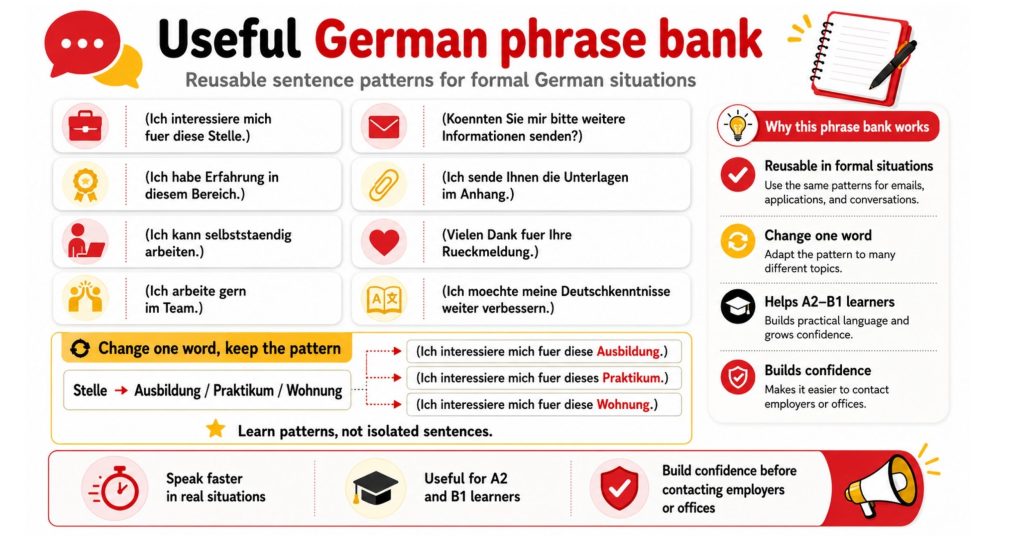
A job interview needs more than grammar; it needs clear answers. Prepare your self-introduction first, then your work experience, and finally your strengths and motivation. Practice sentences like: I have three years of experience in logistics. I can work well in a team. I want to improve my German further.
Prepare questions for the employer too — ask about working hours, tasks, and training. Speaking practice should be part of every skilled worker’s preparation for working in Germany.
How Test German helps
Learners preparing for Goethe, telc, DTZ, or ÖSD exams benefit most from practicing realistic exam tasks rather than only memorizing vocabulary. Test German offers AI-supported writing and speaking practice with instant feedback, helping learners improve grammar, vocabulary, and communication skills under exam-like conditions. This makes it easier to prepare for both language exams and real workplace communication.
Ready to prepare for your German exam? Practice realistic Goethe, telc, DTZ, and ÖSD tasks with instant AI feedback and improve your German for everyday work and professional communication. Start your free Test German demo today.
A simple 30-day German plan for skilled workers
Use a small plan, because consistency gives better results.
Week one: Learn job words. Focus on contract, working hours, salary, tasks, team, and safety. Write ten simple sentences about your work history.
Week two: Practice speaking. Record your self-introduction every day, then answer five job interview questions.
Week three: Write emails. Write one to an employer, one to an authority, and one to a colleague.
Week four: Do exam-style tasks. Complete one Goethe or telc writing task and one speaking task, so exam German connects with real work German.
This routine keeps the target realistic and helps you reach the German level needed for skilled worker immigration by combining document writing, interviews, and workplace communication.
Common mistakes in visa and language preparation
Many learners start too late. They know the visa steps but cannot speak in interviews.
Another mistake is relying mainly on vocabulary apps. While these apps are useful for memorizing new words, they rarely provide realistic speaking, writing, listening, or exam practice. AI-supported practice can complement vocabulary learning by providing realistic tasks, instant feedback, and opportunities to practice communication in context.
Some learners also ignore writing — yet working in Germany includes emails, forms, and short explanations. Others choose an exam without checking acceptance; always ask the employer or authority first.
Finally, many learners wait for perfect grammar, and this slows progress. Build clear B1 sentences first, then improve accuracy step by step. This method supports both confidence and practical communication.
Useful German phrase bank
Use these patterns — they work in many formal work situations:
How to measure your progress
Measure progress every week. Record one speaking answer, then write one short text, and compare your old and new answers. Check four points:
- Did you answer the task?
- Did you use clear word order?
- Did you make fewer repeated mistakes?
- Can you explain your work experience naturally, without translating every sentence?
Track important vocabulary as well: choose twenty words per week and use them actively in sentences, not just in reading. This is how your German becomes useful for real life.
You may also find these guides helpful
- Goethe B1 Exam Guide
- telc B1 Exam Preparation
- German Job Interview Vocabulary
- Chancenkarte Germany 2026: Is A1 German Enough for the Opportunity Card?
- Goethe vs. telc: Which Exam Should You Choose?
Conclusion
Your German level matters more than many skilled workers realize. The visa process may focus on your job offer and qualifications, but everyday work requires real communication skills. B1 provides a solid starting point, while B2 offers greater confidence and better long-term career opportunities, and a Goethe or telc certificate helps you demonstrate your level.
Starting your German preparation early gives you more time to build confidence before interviews, workplace communication, and everyday life in Germany. Whether your goal is B1 or B2, consistent practice is one of the best investments you can make for your future career.
Want to read more about digital learning technology from Wilhelm Digital? Explore now!
FAQ
Do I always need German for a skilled worker visa? Not always. Some visa pathways focus mainly on the job offer and qualification, and do not require a German certificate during the application. However, your job or professional recognition may still require German — always check with the authority and your employer.
Can I work in Germany with A2 German? A2 may help with basic daily life, but it rarely feels enough for workplace communication. Most employers expect at least B1 for routine work tasks.
Should skilled workers target B1 or B2? B1 works for routine communication. B2 fits many professional and regulated jobs better and is often the stronger long-term target.
Which jobs require B2 German? Regulated and communication-heavy professions — such as nursing, healthcare, education, and many office roles — often expect B2 or a profession-specific language qualification. Requirements are set by the relevant licensing authority.
How long does it take to reach B1 German? It depends on your starting level, study time, and practice quality. With consistent daily practice, many learners move from A2 to B1 within several months.
Which exam should I choose, Goethe or telc? Choose the exam that your employer, authority, or recognition office accepts. Both are widely recognized and can support your career goals.
When should I start learning German for a work visa? Start before your application. Early practice helps with interviews, documents, and daily life — and gives you time to reach B1 or B2 without pressure.
Disclaimer:
Dieser Blog dient ausschließlich zu Informations- und Aufklärungszwecken. Die Inhalte können durch andere Quellen überprüft werden. Der Autor übernimmt keine rechtliche Verantwortung für Entscheidungen, die auf Grundlage dieser Informationen getroffen werden.