Key Account & Partner Managerin bei Wilhelm Digital
The ÖSD B1 Prüfung Guide helps B1 learners understand the exam and prepare in a clear, structured way.
The guide introduces the four modules: reading, listening, writing, and speaking. It focuses especially on productive skills, useful structures, and model test practice.
The DTZ Schreiben Guide helps A2–B1 learners prepare for the writing part of the Deutsch-Test für Zuwanderer.
You will learn how to write clear, short letters and emails. The guide shows you how to answer every task point, choose the right tone, and organize your text. It also includes formal and informal model answers.
The DTZ Sprechen B1 exam checks how well you can communicate in common daily situations. You need to introduce yourself, talk about experiences, and plan something together with another person.
The telc B1 Sprechen exam can feel difficult when you do not know how to organize your answers. You may know useful German words but still find it hard to speak clearly, react to a partner, or finish a planning task.
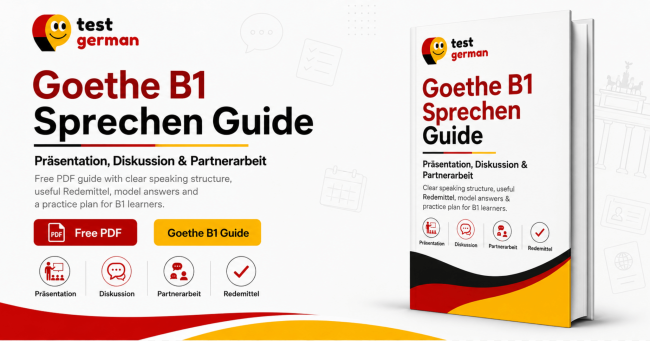
The Goethe B1 Sprechen Guide helps you prepare for the speaking part of the Goethe B1 exam. It explains each task in simple English and gives you useful German phrases.
You will learn how to plan something with a partner, give a short Präsentation and take part in a Diskussion. The guide also includes model answers, speaking tasks, and a seven-day practice plan.
Jobcenter and Employment Agency letters in Germany can feel stressful at first. Many learners open a letter and see long words, formal phrases, and important dates. Therefore, they feel nervous. However, you do not need perfect German to understand the main message.
German language requirements for a work visa can be confusing in 2026. Germany continues to welcome skilled workers in many sectors, but the required language level depends on your profession, your employer, and your visa pathway. Some visa routes do not require proof of German skills, yet real working life is a different story: you need German for interviews, emails, documents, and daily communication.
The Chancenkarte is an important topic for many people in 2026. Many learners want to know one simple thing. Can I look for a job in Germany with A1 German?
The answer can be yes. However, you must understand the rules clearly. The Opportunity Card, or Chancenkarte, helps skilled workers enter Germany for job search. For the points route, applicants need German at A1 or English at B2. They also need formal training or a university degree. In addition, they need enough money for their stay.
The Goethe A1 exam for family reunion is rarely just a language test. For most people who sit in it, it is tied to a spouse, a visa appointment, and the start of a new life in Germany. That mix of paperwork and emotion is exactly why preparation should feel calm, structured, and realistic rather than rushed.
After everyday German, many learners reach a point where they need German for work. They want to write clearer emails, speak more confidently with colleagues, and understand contracts, interviews, and job tasks. This is exactly where Berufssprachkurse come in: they help people move from general German to workplace German.